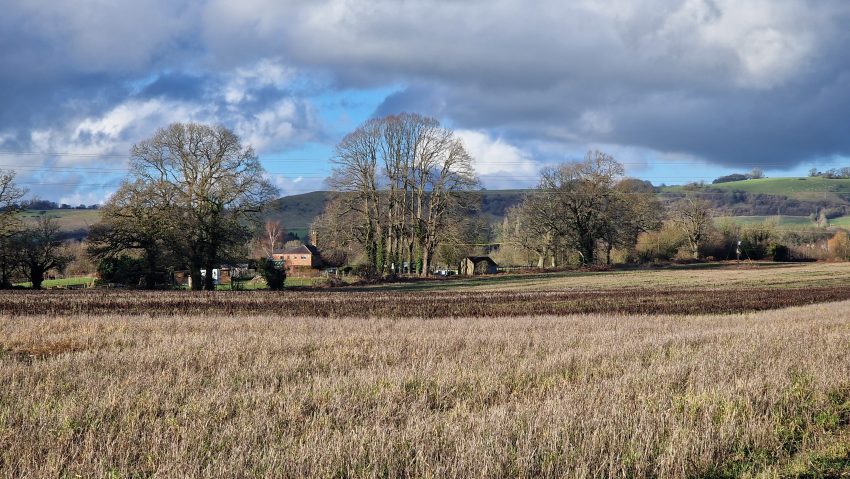
Winter in the countryside
It will come as little surprise to those who know me that winter is not my favourite time of year.
I do not like the lack of daylight, nor the damp and the mud. I dislike the cold, although winters now are often not cold enough. Regular, crisp, fresh mornings seem more of a treat than an inevitability.
However, on a day when the fog, mist and rain give it a rest for a while, there is much to enjoy, and enjoy it you must.
Getting Out Anyway
To completely contradict what I have just said, it is important to get out as often as possible, even when the weather is not to your choosing. In the UK, the weather is often not to your choosing, so you must face the adversity. The alternative is to never go out at all.
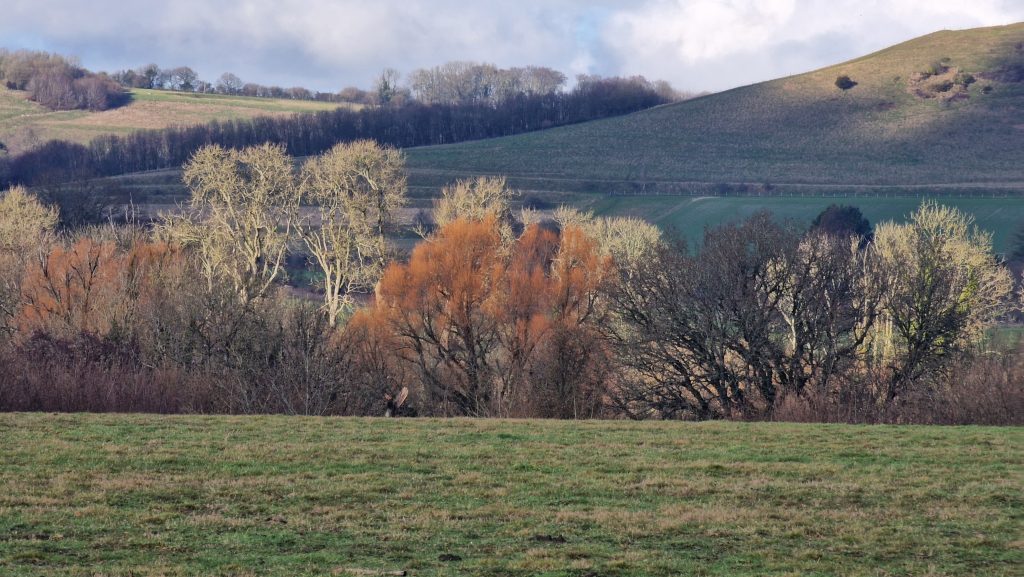
As I look out today it is misty, almost foggy, and that has its own special qualities. I digress. Yesterday was lovely, so back to it.
Look again. Look properly. Use all the senses.
The Bones of the Countryside
A good friend of mine, Andy, (a great countryman and one of the best furniture restorers I know) is of a similar inclination. Some years ago we were discussing my dislike of winter, and he made an observation that has stayed with me.
The thing he likes most about winter is that you can see the countryside in a completely different way to the rest of the year. You can see the bones of it.
The silhouette of trees. The flow of the land. The geology barely covered by a flimsy skin of soil. The landscape is naked, save for the occasional evergreen. There is not a leaf to be seen.
Birds, Trees and Quiet Observation
This is the time of year to start birdwatching if you want to acquire real knowledge. Birds are easier to see, they are vocal throughout the day, and the first territorial claims are being staked out.
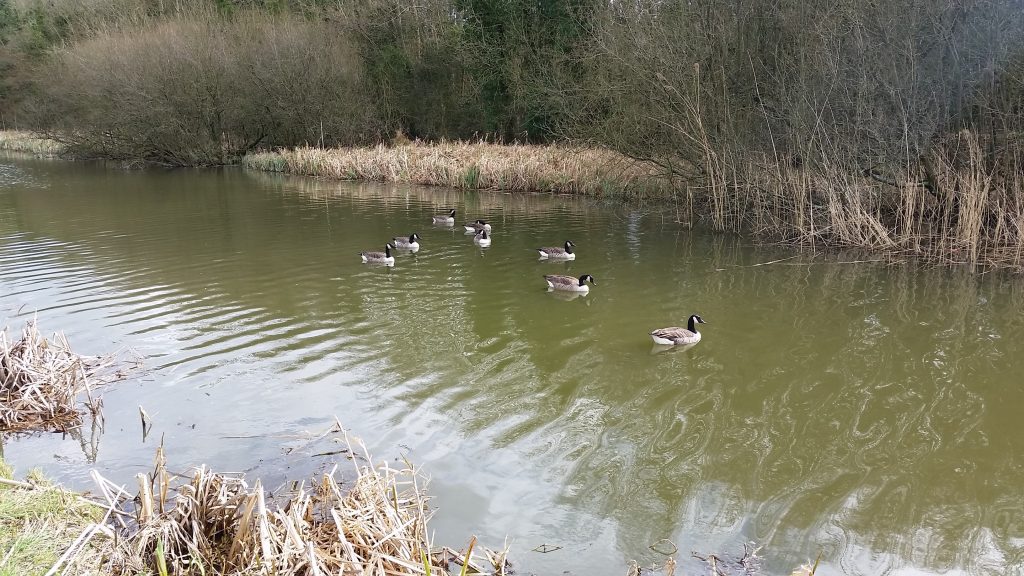
If you listen carefully, you may hear blackbirds nearby practising their songs sotto voce, as though keeping a great secret to be unleashed on a rival at a vital evening moment.
Winter is also the season to learn your trees. The bare shapes stand stark against the sky. Proud poplars, tall and formal. The sheer breadth and angular strength of mighty oaks. The often chaotic form of ash. The graceful spread of beech. The upright, brushy delicacy of birch. The dangerous madness of sloe thickets. The unpollarded willow, reaching skyward, only to be split or toppled by winter storms.
Learn the shape and the bark. Confirm identity from the last remains of leaves, the litter not yet dragged underground by worms.
Mammals on the Move
The same is true of our native animals. Herds of deer stand nervously in open fields, spooked by a distant dog galloping back towards woodland shelter. Hares sit silent and still, then explode into mercurial speed across the landscape.
If you are lucky, you may see smaller, more secretive creatures. Weasels, stoats, polecats, mice and voles, all keeping a watchful eye on the sky for kestrels, owls and buzzards.
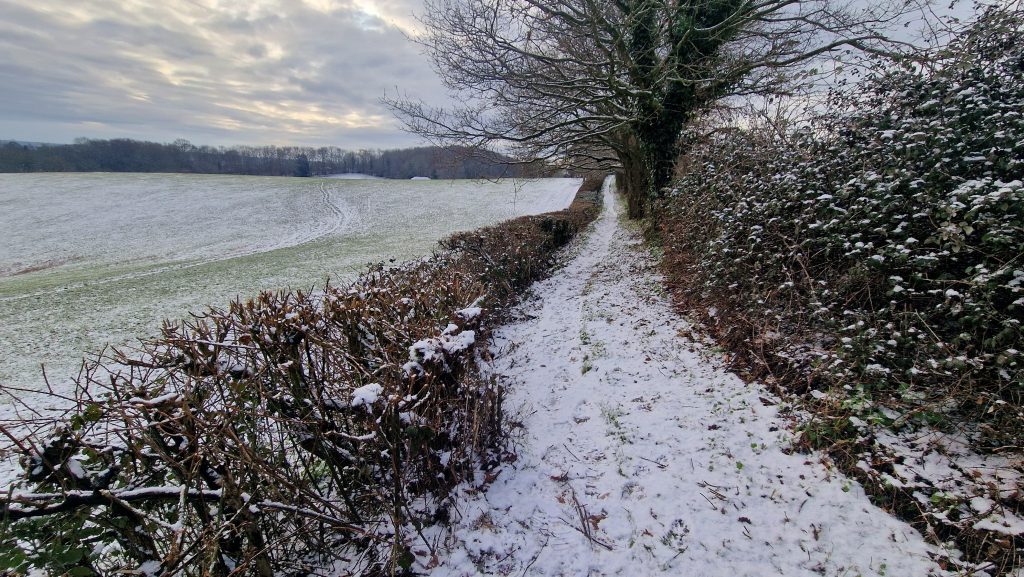
Reading the Geology
I mention geology because this, too, is easier to read in winter.
The shape of the land and the pattern of winter waterflows reveal the rocks below. Swallets and springs mark boundaries between ancient rock types. Changes in slope show differing resistance to weathering and erosion. Rivers in flood and high groundwater expose long-lost streams and channels.
Watercourses diverted for mills or navigation leave behind weirs, dams, leats and cuts. Floodwater reveals the ghost paths of ancient rivers.
Spring on the Edge of Winter
Seeing the landscape in this way only deepened my first love of the countryside at this time of year, the emergence of new plant life.
Snowdrops are the undisputed royalty of January, but look also for wood anemones, a welcome splash of colour in sunlit corners. Then come lungwort, dead-nettle and celandines, providing a vital feast for emerging bees and insects.
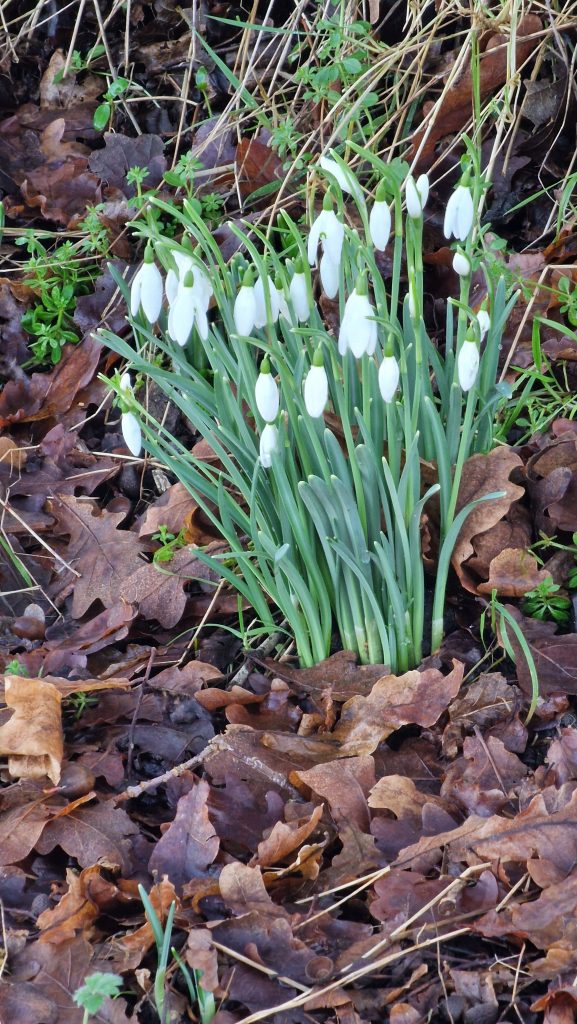
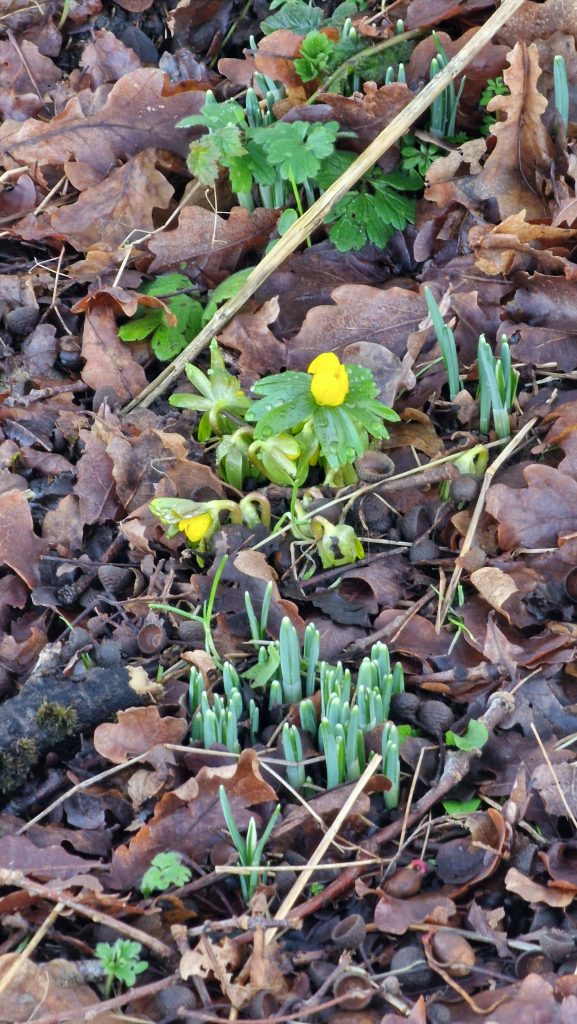
The air changes too.
Autumn air, heavy with earthy, wet and mouldering notes, gives way to winter clarity. The air becomes sharper and cleaner, sometimes carrying only the steely scent of frost or water, reminiscent of a mountain stream. As plants emerge, sweeter notes creep in. Almost imperceptible at first, then building as more flowers bloom, until heady scents begin to dominate.
Get Out There
My message, then, is simple.
Winter is not an absence of life, but a moment of clarity. A season when the countryside reveals its structure, its history and its intent. If you learn to read it now, spring arrives richer and more meaningful for it.
Get outside.
Would you like to talk about your passion?
We welcome submissions from anyone that is passionate about the countryside, seasons, farming, food, rural activities or anything of that nature. Please feel free to Contact us.
Want to get out more?
Have a look at Roaming the Paths for guided outdoor exploration.